Notes and reflections on Yuval Noah Harari’s course segment on the domestication of animals. The explanations below summarize the arguments presented in the lecture.
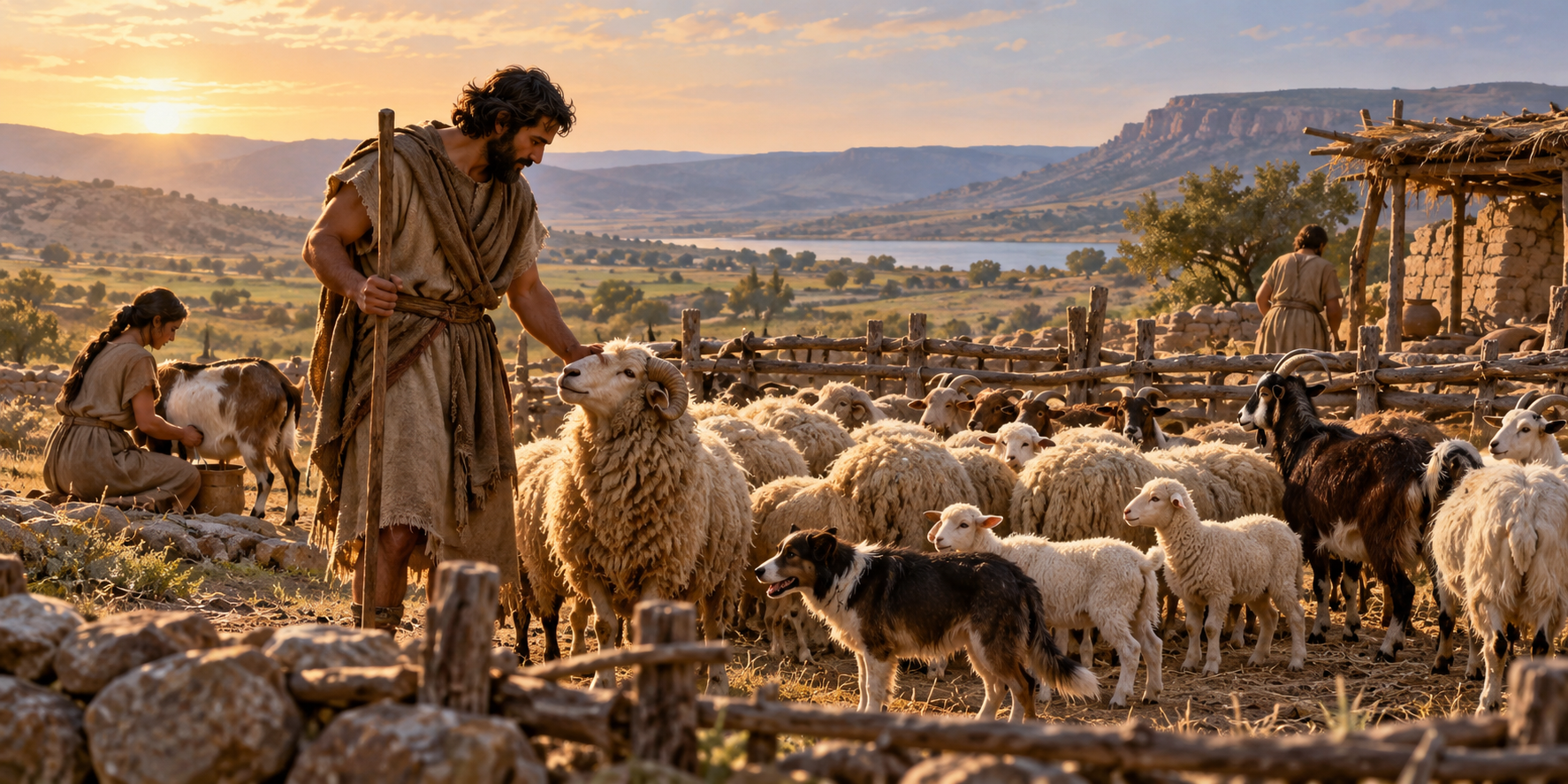
Domesticated Animals: Success for the Species, Suffering for the Individual
The agricultural revolution changed more than the relationship between humans and plants. As Harari explains, it also transformed the lives of animals. Sheep, goats, pigs, cattle, chickens, horses, and other species gradually became part of human agricultural systems.
From one point of view, domestication was an extraordinary evolutionary success. Humans carried these animals into new regions, protected them, fed them, and encouraged them to reproduce in enormous numbers.
But Harari argues that this way of measuring success leaves out something important: the experience of the individual animal.
How Animal Domestication May Have Begun
Harari presents more than one possible explanation for how wild animals became domesticated.
One possibility begins with selective hunting. Hunters who depended on wild sheep, for example, had a reason not to kill fertile females or young animals. Instead, they could concentrate on adult males and animals that were old or sick, allowing the herd to continue reproducing.
A later step may have been defending those wild herds from predators and rival human groups. Once a band depended heavily on a particular herd, it had an incentive to protect that herd from wolves, lions, and competing hunters.
Humans could then begin controlling the animals more directly, perhaps by confining them in a valley or gorge. Over time, they could also influence which animals survived and reproduced.
The most aggressive males and the animals most likely to resist human control would be killed first. Calmer and more manageable animals would live longer and have more opportunities to reproduce. Generation after generation, the herd would become increasingly suited to human needs.
Harari also describes another possible route. Hunters may have captured young animals and kept them alive as a reserve source of food. If some survived long enough to reproduce, the same process of selection could begin. The most aggressive animals would be slaughtered first while the more submissive animals were allowed to breed.
Harari presents these as possible scenarios rather than a single certain sequence that happened everywhere.
Why Domesticated Animals Became So Valuable
Once animals were domesticated, they provided humans with much more than meat.
They supplied milk and eggs for food, wool and skins for raw materials, and muscle power for work. Oxen, horses, donkeys, and other animals could pull plows, carry loads, grind grain, and provide transportation.
Tasks that once had to be done entirely with human muscles could increasingly be transferred to animals.
As agricultural societies expanded, their domesticated animals spread with them. Harari contrasts the relatively small and geographically limited populations of these animals near the beginning of the agricultural revolution with their enormous numbers today.
From a purely evolutionary point of view, that looks like tremendous success.
The Evolutionary Measure of Success
Evolution measures success largely through survival and reproduction. A species that spreads across the world and produces vast numbers of descendants is doing very well by that standard.
Harari points out that domesticated chickens, cattle, pigs, and sheep became some of the most widespread animals on Earth because of their relationship with humans.
But this measure tells us nothing about what life is like for the individual animal.
A species can multiply into billions while the animals themselves live restricted, painful, or frightening lives.
That gap between the success of the species and the experience of the individual is the main issue Harari wants us to notice.
A Shorter and More Controlled Life
Many domesticated animals are slaughtered long before reaching anything close to their natural life expectancy.
The reason is economic. Once an animal has reached the desired size, continuing to feed it may no longer benefit the farmer. From the standpoint of production, slaughtering the animal at that point can make sense.
Other animals are allowed to live longer because people need their labor, milk, or eggs. But a longer life does not necessarily mean a freer one.
Draft animals such as oxen, horses, donkeys, and camels had to be controlled well enough to pull carts and plows. Their movement was restricted, their behavior shaped, and their reproduction managed.
Harari describes the use of pens, cages, harnesses, leashes, whips, cattle prods, and castration as methods humans developed to control animals and make them more useful.
Castration also allowed humans to decide which males would reproduce. By allowing only selected males to breed, farmers could gradually create herds that were easier to manage.
Looking at the Plow From the Ox’s Point of View
Harari uses an ancient Egyptian scene of a farmer plowing a field to make the argument more personal.
At first glance, the picture can represent agricultural progress: a farmer cultivating the land with the help of domesticated animals.
Harari asks us to look at the same scene from the ox’s point of view.
The wild ancestors of cattle lived in herds and moved freely through their environment. The domesticated ox, by contrast, could spend much of its life yoked to a plow and controlled by humans, with little opportunity to follow the natural social and behavioral patterns of its ancestors.
Harari then points to the farmer himself. He too is bent over in hard physical labor.
The image therefore becomes a reminder that the agricultural revolution could increase the power and productivity of a society while demanding difficult lives from both the animals and the humans inside that system.
Making Animals Dependent
The lecture includes several harsh examples of the lengths people have gone to in order to control domesticated animals.
Harari describes traditional practices in parts of New Guinea in which pigs were deliberately injured so they would be less capable of wandering away and surviving independently.
The purpose was control. A pig that could no longer manage easily on its own became more dependent on its human owner.
The examples are disturbing, but they illustrate the larger argument: domestication did not simply mean feeding and protecting animals. It often meant reshaping their bodies, behavior, movement, and relationships to suit human purposes.
The Problem of Milk
Harari then turns to dairy farming.
Cows, goats, and sheep produce milk after giving birth, and that milk exists biologically to feed their offspring. If humans want a continuing supply, they must manage both reproduction and the relationship between mother and young.
Historically, farmers developed different ways of doing this.
One method was to separate young animals from their mothers. Female calves could be raised to become the next generation of dairy cows, while males might be used for meat.
Harari also describes older methods designed to keep a young animal near its mother so that milk production continued while preventing the offspring from drinking too much of the milk.
The details varied from place to place, but the underlying problem remained the same: humans wanted the milk, while the mother’s body produced it for her offspring.
Success for the Species, But What About the Individual?
Harari’s conclusion brings the argument back to the difference between collective success and individual experience.
The agricultural revolution was extremely successful for domesticated animals if success is measured by numbers. Humans helped cattle, pigs, sheep, goats, and chickens spread across much of the world and reproduce on a scale their wild ancestors never approached.
But that does not mean the individual animals benefited.
Harari argues that when we study living creatures with sensations, emotions, and social needs, counting DNA copies is not enough. We also have to ask what life was actually like for the individual.
That question will become important again in the next part of the course. Harari turns from the agricultural revolution itself toward the societies it created: cities, kingdoms, and empires. Human collective power would continue to grow, but greater power for the species or the society would not necessarily mean a better life for every individual within it.