Notes and reflections on segment 7-1 of Yuval Noah Harari’s course lecture, “No Justice in History.” This article summarizes his arguments and illustrative comparisons.
No Justice in History: How Hierarchies Shape Opportunity
A society can bring millions of people together and still give them very different chances in life.
In Building Pyramids, Harari explained how shared stories help strangers cooperate. The previous article added the records and calculations needed to administer that cooperation. Now he asks who benefits from the resulting order.
His answer shifts our attention from the achievements of cities and kingdoms to the people living within them. The rules that made large societies possible could also divide their inhabitants into privileged and disadvantaged groups.
A Category Before a Person
Harari describes a recurring pattern: people are assigned to categories, those categories are ranked, and treatment follows rank.
The categories vary. A society may place particular weight on caste, religion, race, gender, or wealth. Several distinctions can operate together, so a person’s position cannot always be understood through a single label.
The earlier discussion of Hammurabi showed how social status could affect legal penalties. This lecture widens the question. Who can marry whom? Who can receive an education? Whose abilities will be taken seriously?
Harari uses caste-based marriage expectations as an example. Where inherited group membership determines whether someone is considered a suitable spouse, an individual can be accepted or rejected before personal qualities enter the discussion.
The category supplies an answer before anyone knows the person.
Making Privilege Seem Natural
People who accept a hierarchy often understand it as part of the world’s proper order.
Harari illustrates this with religious origin stories that connect social ranks to the creation of the cosmos. He also discusses racial ideologies that try to turn visible physical differences into claims about intelligence, morality, and entitlement to power.
These are examples of how inequality is justified. A story about a group’s rightful place does not establish that its members deserve fewer opportunities.
His comparison then reaches a more familiar belief: that wealth reliably measures intelligence and hard work. In the outlook he criticizes, better housing, education, and medical care appear to be rewards that people have earned through superior ability.
Harari asks how much of that advantage comes from being born into a family that already possesses resources.
This argument does not require treating caste, racial discrimination, and economic inequality as morally identical. Harari explicitly acknowledges differences in the severity of discrimination. He is comparing the way people explain and defend unequal arrangements.
Calling a hierarchy imagined also leaves its consequences fully real. A social rule can determine access to a classroom, a job, or a home even though no law of nature requires that rule.
Why Strangers Rely on Labels
Harari connects classification to the practical demands of living among strangers.
In a small community, people may know one another’s history and character. In a large city, most encounters happen without that knowledge. Clothing, religious symbols, and other visible cues can become shortcuts for deciding how to behave toward someone.
Institutions can turn those shortcuts into rules. Harari’s teaching examples ask us to imagine a religious teacher accepting pupils according to community membership, gender, or caste. The decision can exclude a capable learner before teaching begins.
His broad claim is that complex societies have repeatedly relied on imagined hierarchies. That is his interpretation of a very large historical pattern; it should not become a proof that discrimination is inevitable or desirable.
Explaining how a classification helps organize encounters does not settle whether its rules are just.
The First Barrier: Developing an Ability
Harari does not deny that individuals differ in their abilities. He asks how social position affects what becomes of those abilities.
His first mechanism is unequal access to the conditions needed to learn.
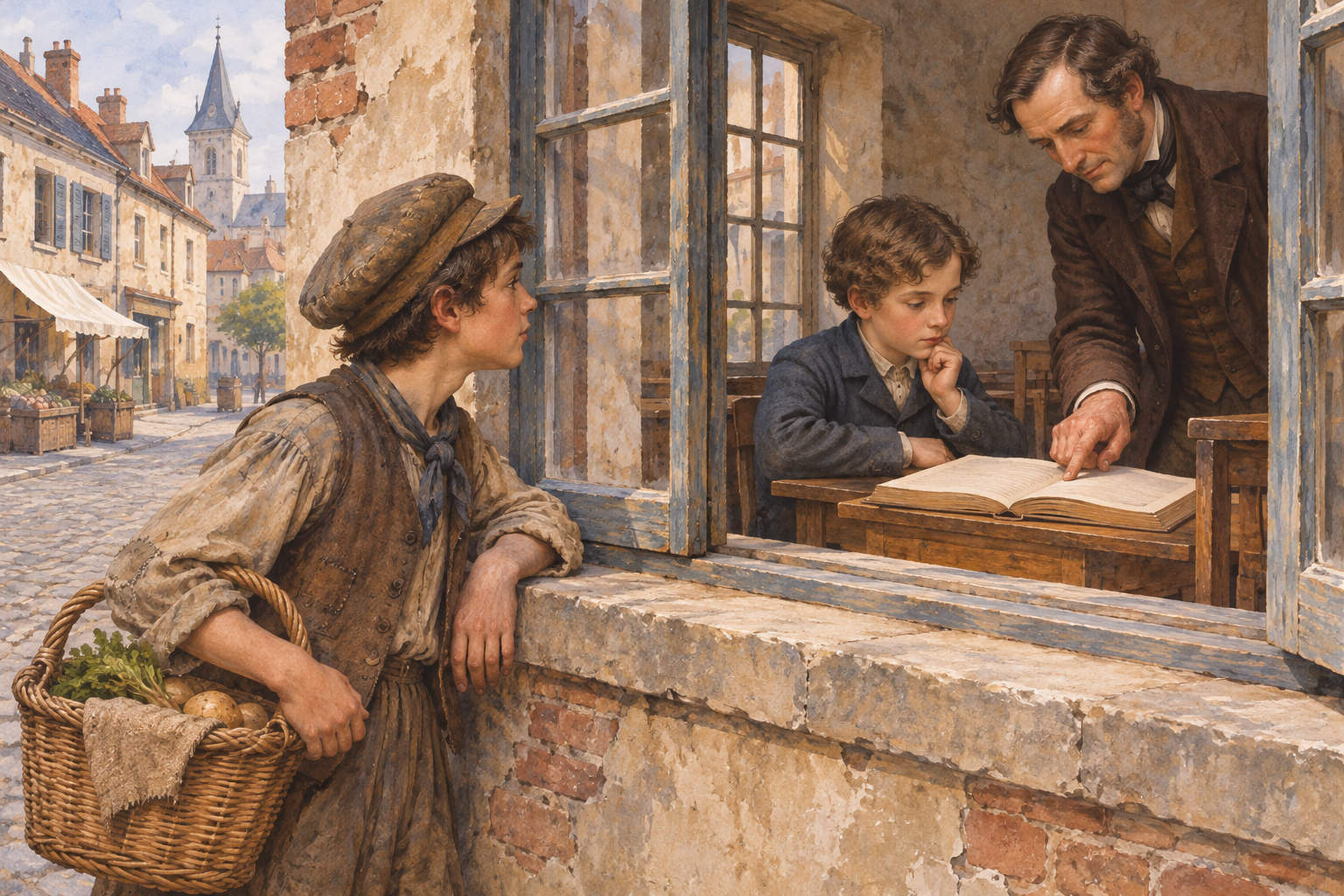
A potential talent for business, sport, or another activity usually needs practice, instruction, and time. A child whose family can support years of education has opportunities that may be unavailable to a child who must leave school to earn money.
By the time their achievements are compared, the two may have received very different chances to prepare. An apparent difference in accomplishment cannot, by itself, tell us how much each could have achieved under different circumstances.
Research beyond the lecture gives a concrete example. Opportunity Insights’ research on education finds that students from lower-income families attend selective colleges at lower rates than students from wealthier families even when comparing students with the same test scores. That finding concerns access; it does not establish that family background fixes every person’s future.
Harari’s point is that judging the outcome alone can hide the opportunities that helped produce it.
The Second Barrier: Using an Ability
Even equal preparation may not lead to equal treatment.
For his second mechanism, Harari offers a thought experiment set in British-ruled India. Imagine people from different caste and religious backgrounds who have somehow acquired the same business skills. They still face different prospects if laws, social expectations, and informal barriers favor some groups over others.
The example illustrates a distinction between possessing a skill and being allowed to benefit from it. It is not a measurement of every community’s position throughout colonial India.
Together, the two mechanisms explain how disadvantage can persist. Some people receive fewer chances to develop their abilities. Those who overcome that obstacle may still encounter rules that limit what they can do with them.
How Did These Particular Divisions Take Hold?
The lecture leaves us with a way to examine claims about success and failure. Before treating a person’s position as a verdict on ability or effort, consider the opportunities available along the way and the rules governing their use.
That question follows directly from Harari’s account of imagined orders. Shared beliefs help organize cooperation, but they also influence whose work is rewarded and whose potential goes undeveloped.
One further problem remains. If societies repeatedly create hierarchies, why do they emphasize different divisions? Why does caste become so influential in one setting, religion in another, and race or wealth in another?
Harari turns to the origins of those differences in the next segment.